The Files app in Chrome OS Version 93 on my Google Pixelbook is taking too long to refresh the contents of the file system at first launch. I don’t know for certain, but I suspect this is a bug introduced with Version 93 because I don’t recall this being a problem. I also see this issue in File, Save dialogs in Chrome OS apps.
Of all my favorite teams, the Cubs have the most talent and I expect will have chances to win championships again in the foreseeable future.
Not true now and not likely in the foreseeable future. The Packers got to the NFC championship game and this appears to be the last year of the Aaron Rodgers era, so the window for them appears to be closing.
After a week of cold, wet weather it’s nice to see the sun and feel the cool autumn breeze.
I notice that my free year subscription to Apple TV+ expires at the end of next month and they released the first episode of the Asimov Foundation series show today. Coincidence? My recollection is the Asimov series was a big part of their launch pitch last year, and of course up until now had failed to deliver and I’ve been considering not renewing.
I don’t see a good way to confirm what processor type is in a Wear OS watch. Settings does not show any processor details. Consequently, I don’t know how you confirm or refute Mobvoi’s claim they are now shipping Qualcomm 4100+ chips rather than the “base” 4100.
Learning Computing
Back when there were several book store chains and plenty of stores I spent a fair amount of time in them and in particular looking through the computer magazine section. Magazines were a big part of my formative computing years, and I looked forward to each month’s issue of Byte. The magazines were not only a source of news about the latest hardware and software, they were also a means of software distribution containing pages of source code available to manually enter on a variety of computer platforms.
Physical book stores are nearly extinct and computer magazines shrank in to oblivion, replaced by the Internet, but I have found one corner of the Internet where computer magazines still live. You may have heard of the Raspberry Pi, which is an inexpensive “computer on a chip” popular amongst makers. What you might not know is that raspberrypi.org is more than just the computer hardware, it’s a foundation dedicated towards computer education. The foundation publishes tutorials and lesson plans for teachers and it has a publishing arm for books and magazines.
Four different magazines are published: HackSpace, Custom PC, Wireframe, and The MagPi, which you can subscribe to and purchase online and in stores in the United Kingdom. Better yet, the magazines and books are free to download in PDF format.
If you own a Raspberry Pi and have the full desktop version of the operating system installed you will find a Bookshelf app in the Help menu of the desktop’s application launcher. Bookshelf has tabs for each magazine and books that you can download and read on the Pi. If you don’t have a Pi you can browse through and download the PDFS using the web browser on your computer.
If you are not familiar with Raspberry Pi you will find everything you need to know about it on their web site, raspberrypi.org. Another great source for information is the Official Raspberry Pi Handbook, and the 2022 version has been just released and available to download.
If you are looking for an inexpensive starter computer for yourself or a child, I recommend the Raspberry Pi 400, which is an “all-in-one” computer you can buy for $70. I also think anyone considering a future in computing, or just interested to learn more, should buy a Raspberry Pi 4 kit, which you can assemble and use to learn more about computer hardware and software.
2021 Microsoft Surface Event
I am contemplating purchasing a new laptop computer so that I can access and learn the latest operating systems. I am most interested in Window 11 because Windows is the primary operating system that I use every work day, but the integrations between iPadOS and MacOS also have me interested in a Mac. If I buy a Mac I can also run Windows 11 in a VM, so that will provide me the best of both worlds.
So, I watched the Microsoft Event today to see whether Microsoft might announce something that will influence my purchase decision. My conclusion is none of the products announced today fit in the budget that I have in mind because of the add-ons one has to purchase to gain full functionality.
Microsoft did announce nice looking products today, but for me they have a real pricing problem. Take, for example, the new Surface Go 3. The lowest price version costs $399, which comes with 4 GB of RAM and only 64 GB of storage, which I really do not think is enough storage for any productivity device in 2021. Consequently, the lowest model I would consider is the mid-tier 8 GB RAM, 128 GB model at $549, but that only gets you the tablet. You will want to add a type cover that costs at least $100 and most likely a Surface Pen for another $70, for a grand total of $719, and that combo is with an Intel Pentium processor rather than the more powerful Intel Core i5 in the Surface Laptop Go. In my opinion Microsoft should include the type keyboard with the Surface Pro and Surface Go at their current price.
My research prior to the event tells me that the Microsoft product that most makes sense for a reasonable PC running Windows 11 is the Surface Laptop Go. While it won’t run MacOS, you can buy a well equipped model (8 GB RAM, 256 GB SSD) for $800.
Thing is, I can also buy a Mac Mini with the same memory, storage, and price and for less than $200 also have the ability to run Windows 11. Of course, the Mini is a desktop and my bias is toward the portability of a laptop, so that has me looking at a Macbook Air for $200 more, which is pushing the price a bit higher than I would like.
Of course, I don’t intend to make a decision until after the expected Apple Mac event that should happen in October. Rumors are a new Mac Mini and Macbook Pros will be announced, but not an Air. A new Macbook Pro might influence pricing of the current Airs. My ideal would be a new entry level Pro with 8 GB of RAM and 512 GB SSD starting at the current $1299 “base” price, which I think would mean Apple could drop the price of the current Airs by $100 to $200. The logic being it would not make sense to have the high end Air and the Low end Pro with the same specs and same price because nobody would by the high end Air. (The only reason to buy the high end Air over the Pro right now is the 512 GB storage at $50 less price!)
The other question is, what will be the specs for the new Mac Minis? In this case I expect the specs will remain the same, the prices will remain the same, and there will be a processor upgrade. However, the consequence there might be availability of the current Mac Minis at lower prices. An 8 GB RAM, 512 GB SSD model at nearly $600 is appealing.
One might think the reasoning I’ve described above is an “apples to oranges” comparison. I see it as a “get what I need” versus an “investment” comparison. I bought my last Macbook Air 15 years ago, and it still functions! It’s really slow compared to most devices today, but what that experience tells me is that buying an Apple laptop or desktop realistically gets me 5 to 7 years of use. I can buy a cheaper laptop to just run Windows 11 but it probably gets me 4 years of real use.
So, now we wait for the next Apple event. Traditionally Apple has held two events in the fall, one in September to announce new iPhones, which they did, and one in October featuring Macs and iPads, thus one more event to gather information for making my purchase decision.
The Quick Notes feature with iPadOS 15 not only provides a way to quickly create a note, but it also links notes to apps if they are set up for it. An example, when I open this site in Safari on my iPad the note that contains the link of this site pops up as a thumbnail at the lower right and it goes away when I scroll the page. I am creating scratch note of ideas related to this blog. So far I’ve found that I can also link a note to a list in Things.
Happy Operating System Season
And here you thought pumpkin spice was for fall, no it’s operating system season! Yesterday Apple released iOS and iPadOS Version 15, and coming up October is Android Version 12, Windows 11, and MacOS Monterey. Three companies (Apple, Google, Microsoft) and three platforms (smartphone, tablets, desktop/laptop).
I installed iPadOS Version 15 on my iPad Mini yesterday and I haven’t spent a significant enough time with it yet. So far it’s a mixed bag. For example, being able to place widgets on the home screen makes them a bunch more useful, but the tradeoff is a decrease in the number of icons per line that display. My old iPad Mini has a quarter inch bezel followed by a half inch of empty space on the left and right side of the screen. I fear this is going to look worse on the iPad Air.
Of course, iPhone owners have had widgets and App Library since last year, so this is not new to them. I don’t own an iPhone, but so far I wonder whether they see much new in this version of iOS.
For some reason I like how the App Library flys up from the lower right of the screen. I do think App Library is a better way to manage applications than has existed prior, just wish I could edit what Apple does automatically to tailor the result. I suspect the larger icons in each group were determined to be the most frequently used app of that group, do they change over time?
The changes of widgets and App Library create questions of what icons to place on the home screen if any, given the dock. Tapping the widgets launches the associated app, so they serve that purpose in addition to providing information. I probably don’t need any icons but so far I have kept six: Mail, Safari, Streaks, Notes, NetNewsWire and Pocket. Another decision is, what to do with the “old page” that displays when you swipe right from the left edge? The widgets on the home screen don’t need to also be there, so there is some changes to be made.
What else? I know the changes to how multitasking works is significant, but I won’t fully experience that until I upgrade the iPad Air. This is the fun of operating system season, discovering new “gifts” and hoping they aren’t lumps of coal.
Only in the United States will half the population recognize COVID-19 as the deadliest disease in American history, while the other half is convinced it is all fake news.
I wonder whether anyone resisting the COVID vaccine finds these stories of regret compelling? I doubt it, they only will be if they are about a relative or someone they personally know.
Sir Sinclair and I
British inventor Sir Clive Sinclair died yesterday, September 16. I, of course, never met this man who had an impact on the direction of my life.
My chosen field of study in college, computer science, led to the career that caused me to move to metropolitan Detroit, ultimately meet and marry my wife, and have the life I now live. How I came to chose to study computer science was influenced by three events during my high school years: the arrival of the Apple II in my high school, taking an after school BASIC programming class, and being gifted the Timex Sinclair 1000. Sir Sinclair invented the ZX80, the predecessor to the ZX8, in Britian, and that same computer was later sold as the Timex Sinclair 1000 in the United States.
I was raised by my grandmother and we lived off social security along with some savings. The personal computers sold at the time cost well beyond our means, but the Timex Sinclair only cost $100, though you needed the nearly $40 additional cost of the 16 KB storage for it to be useful. The nearly $150 total cost made it the most expensive gift my grandmother ever bought me, and I don’t doubt she made sacrifices to buy it, but she felt it important for my future. Turns out my grandmother was right.
Even by the standards of the time, the Timex Sinclair was a bit of a joke for a computer. Frogger was one of the games available for the Timex Sinclair that my friend called “woodtick” because of how the large block pixel graphics of the frog took over the entire TV screen when it got run over by a car.
Back then the common display for personal computers were TV screens. Programs were stored on cassete tapes. As I said, the Timex Sinclair only had 16 kilobytes of RAM. It had a membrane keyboard rather than a real keyboard that had most of the BASIC functions assigned. When writing a program you “typed” PRINT by pressing a combination of a function key and they key that had the command printed on it. I don’t recall whether I ever connected the Timex Sinclair to a printer or did anything like word processing.
Despite the limits Sinclair’s invention made a brand new world of personal computing accessible to me in the comfort of my bedroom floor. Hours of typing in pre-printed programs from magazines and hours of experimenting with little BASIC programs sparked the interest that as I said led to the life I now have.
Reading tributes and stories of Sinclair, I know that I am just one of hundreds of thousands of people around the world that share the same story. What a wonderful legacy. Thank you Sir Sinclair, rest in peace.
It seems to me that the real argument occuring in the United States is between when one’s rights affect the rights of others, which one is given priority? If you look at every problem in the U.S. it comes back to a belief that what matters most is individual rights, even when the exercise thereof impedes upon that same right of another.
Twenty years ago today, a Sikh father was murdered in front of his gas station in Mesa, Arizona by a man who called himself a patriot. Balbir Singh Sodhi was the first person killed in thousands of acts of hate in the aftermath of 9/11. Since his murder, countless lives have been lost or shattered by the way our nation responded to 9/11 — in decades of war, torture, surveillance, deportations, detentions, and hate violence that continues today.
Balbir Singh Sodhi was a kind-hearted and generous man, whom many called “Uncle.” He would give candy to children who came to his gas station as if they were his own children. He let people who didn’t have money for gas fill up and go. His brothers would shake their heads in disbelief. Was he a saint or a fool? But Balbir Uncle would just smile, saying God wants us to serve all. He and his brothers had come to America to escape religious persecution against Sikhs in India. He was planting flowers in front of his gas station when he was shot in the back, targeted for his turban.
Balbir Uncle wore his turban as part of his faith — his commitment to love all of humanity. What if we made the vision that he died for our North Star? What would the world look like if we valued human dignity above all? What if we chose, like Balbir Uncle, to treat all as family, to see no stranger? How would we be remembered 20 years from now? #BalbirSodhi #20YearsSince
Original artwork by Sunroop Kaur, @loquacious_lines
I’ve listened to Andrew Sullivan’s interview with Michael Wolff, who has written three books about the Trump presidency. Wolff’s assessment of Trump is straightforward, he believes Trump is crazy and thus not competent to be a real threat to Democracy. I think Wolff is being too myopic in his assessment, a Trump presidency is not the same as Trump the man. Trump the man is a mark for those in power and that makes a Trump presidency dangerous. Another Trump presidency is dangerous for how it will be used by those who Trump thinks is an ally.
You can rage against the man, or you can enable people to access your applications and sites. Or write a web browser for them to access your site.
What if COVID-19 leads to better treatments for, dare I dream a cure for, cancer?
Wishing It Was So
In my feeds this morning are some statements recalling how united they thought we were on 9/12/2001 and wishing that was the same today. A deeper, perhaps more meaningful question might be, why is it that the United States can only unite around hatred for an external enemy?
Some thought, many hoped, back then that the event would be a catalyst for change. Of course change is always happening, transformation is what is really desired. The difference is between what naturally happens and intent. Transformation requires true understanding of from what to what, which in turn requires a desire to look within.
Take for example the pandemic. Much of the struggle amongst ourselves is superficial. Wear a mask, don’t wear a mask. Get the vaccine, I’ll never get the vaccine. Our attention is on these arguments with little thought about why the arguments are even happening.
For me what the pandemic exposes, and what has existed from well before 9/11, is a majority of people stuck within the basic animal instinct to view everything and everyone by comparison. Either you’re or with me or you’re against me is one of our most basic survival instincts. While this instinct keeps us alive in a moment of crisis, living constantly in this mode prevents one from growing and usually makes us vulnerable to being manipulated in to decisions not in our long term best interests.
The transformation some of us desired after 9/11 that would have resulted in more unity did not happen because there was no intention for it to happen. Change, yes, that has happened, we have evolved to a more fractured not united state than before, and will apparently continue to do so unless we intentionally chose a different path.
The United States of America is only 245 years old. In comparison to the world, the U.S. is a toddler, to the universe, an infant. Our growth (transformation) relies in embracing the seemingly conflicting values of liberty and unity, by transformation from an either/or worldview to a both/and worldview. The transformation will not be easy because everything we know and see around us is built on and reinforces either/or. Either/or keeps power in power. Take the red pill
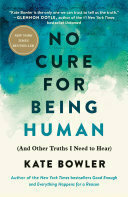
I think When Society Becomes an Addict by Anne Wilson Schaef provides much insight in to why the United States is stuck. 📚
I think the hyper-individualistic mode that pervades the United States is as much a product of the neoliberal reaction the New Deal. Ever since they were enacted we have been stuck in a war over the New Deal laws and philosophy that put constraints the capitalist/wealthy class of the United States. Underlying all of that is the class warfare that drove the finding of the New World and is implicit in the founding of the United States. We won’t achieve anything that we want until we become honest about our beginnings.