Tablets
Wired thinks the Alexa tablets could be a prelude to Amazon trying again to sell a phone. Given that Panos Panay led Microsoft’s efforts with the Microsoft Duo, I wonder whether Amazon would be willing for their phone to be a foldable at a price that seriously undercut the competition. What if Amazon called it a foldable tablet rather than a phone? Either way if foldables are really the future for smartphones their price needs to come down and more big competitors are needed to make that happen. An Amazon foldable priced at $799 would make a splash.
I see that Amazon is replacing their Fire brand of tablets with “Alexa tablets” of 8-inch, 11-inch, and 12-inch sizes. The largest appears intended to be the most premium of the group. A big difference is that the Alexa tablets will have the Google Play store, although it appears Amazon has their own launcher that puts Alexa front and center. I wonder whether launcher alternatives can be installed to make Alexa less visible.
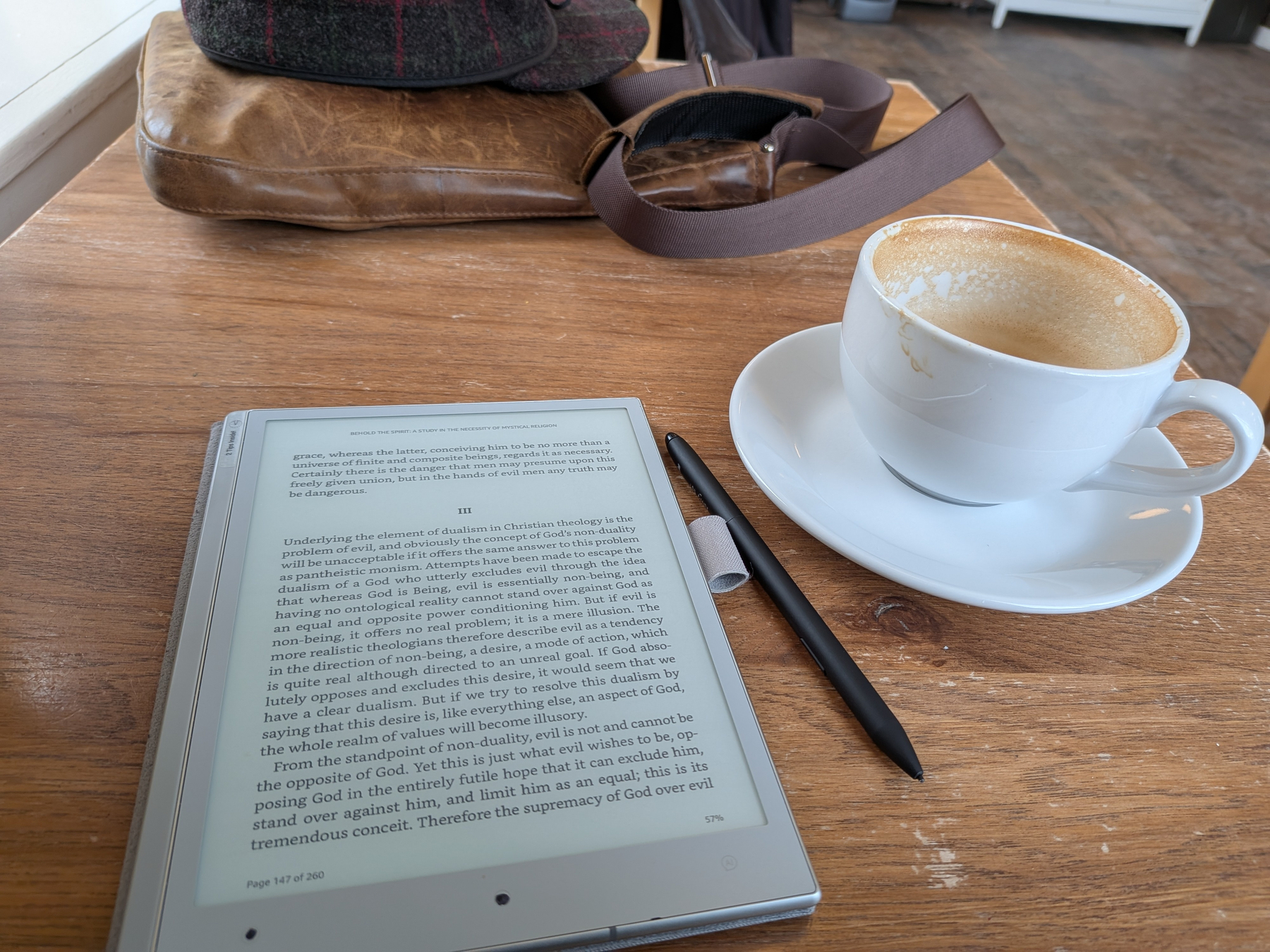
Of Amazon’s hardware products, I am most interested in their Scribe series of “kindles”/e-Ink tablets, but they don’t have an 8-inch variant that I would be most interested in. I personally think Amazon should add Scribe to their Alexa tablet series, with them being their e-ink variants. An 8-inch Scribe that includes the Play store would be a series competitor to Boox and Supernote.
Know When To Hold Them
Apple held their annual iPhone event/broadcast today during which they finally announced their long anticipated foldable phone, the iPhone Duo. When I saw the name leaked yesterday I thought to myself, surely Apple will not mimic Microsoft’s name for their first foldable, but that is the name so hopefully it will sell better than the Surface Duo.
Honestly, while I watch the Apple announcement broadcasts it’s hard for me to get excited by them as nearly all of Apple’s products now cost more than I will ever want to spend. Apple will get kudos for keeping the “base” model Duo to $1,999, which is still more than you pay now for either a Samsung ZFold8 at $1,899 or the Google Pixel 11 Pro Fold at $1,269. I will never spend more than $1,000 for a phone, let alone $2,000 even though it’s true that $1 to $2k purchase can replace the iPad Mini and phone.
Beside the price, I am put off by how the iPhone Duo looks. While it appears the “passport” sized foldable that Samsung and now Apple are using might be “the” winner, the rounded edges of the Duo when folded just look odd. The other problem I have with these foldables is how wide they are, which I think will feel bulky in a front pant pocket, not to mention the 8.96 ounce weight of the Duo is much more than the 7.2 ounces of my Pixel 10.
Given that I use my iPad Mini a lot, I am the type of person that fits the foldable use case. I personally think these devices should be marketed as foldable tablets rather than phones. The problem is, I can’t imagine a way for a foldable to never be bulkier than a smartphone, and I do want to be able to carry my phone without a bag.
Just got the Ugreen HDMI wireless extender transmitter and receiver and I am using it to connect the Pixel 10 desktop mode to the Innoview portable monitor. I’ve watched some video on YouTube and although this is only 1080P the video looks good enough. I am thinking this is an easier way to connect my iPads to a television while traveling but I was curious about how well this works with the Pixel 10. There and been some brief disconnects and it looks like the connection is more solid while I have the transmitter plugged in to power, otherwise it pulls power from the phone.
Boox has released second generation of their 10.3-inch Go series e-Ink tablets that appear intended to compete with the Remarkable 2. There are two versions of this generation, a $400 without a front light and a $450 model with a front light. A major negative, in my opinion, is that Boox has replaced the Wacom EMR stylus support with their InkSense capacitive stylus is that is less accurate and requires charging. I would not buy this tablet due to this choice by Boox.
I would wish that Boox would release an 8-inch e-Ink tablet with Wacom EMR support but that appears to be less likely to happen as time passes.
I am watching a video overview of Inkwell, which is Manton’s RSS app released last week. I’ve tried using Inkwell but find it doesn’t fit in to my web reading triage workflow. I send everything to Readwise Reader where I do all my reading, so the blogging and quote blogging of Inkwell would be more useful for me in Readwise. One thing that I am intrigued by is the Reading Recap feature in Fading, but I don’t know whether I would really use that feature a lot or not.
The 2026 iPad Air M4: Early Impressions:
The second change is memory. The M4 brings 12GB of unified memory, up from 8GB on the M3 model. More RAM means better multitasking and more headroom for demanding tasks. Transcription in Voice Memos and background removal in Pixelmator happen almost instantly. I feel it in Lightroom as well.
My primary concern about the MacBook Neo is that I don’t think the 8 GB of RAM is enough in the current AI era of personal computing. While the quote above is about the new iPad Air, I think the point about the benefit of moving from 8 GB to 12 GB is apt.
Later in his post Om also ponders whether the Neo is a better value than the Air given it includes a keyboard. I do wonder whether Neo will affect iPad sales.
My Thoughts About Android Desktop
I watched XDA’s presentation of the Android desktop mode available in the Android 17 beta. Desktop mode is available with Android 16 too and I’ve tried it out and it’s not bad. I’ve long been intrigued by the idea of using a smartphone as my only computing device, and I honestly think this is best applied to foldables.
As I see it, the main impediment to such an all-in-one device is the lack of wireless connectivity to monitors, keyboards and mice. Imagine being able to use the desktop mode of your phone while the phone is still in your pocket.
It does appear that while desktop mode is available with all Android devices, it’s primary purpose is as a replacement to Chrome OS. For Google, Android desktop mode is a consolidation of operating systems. Google seems convinced that it’s worth it for them to offer a desktop computing user interface for their operating system, even though Chrome OS only has a small percentage of the desktop market, per Wikipedia.
I am not convinced that Android Desktop offers anything for the desktop market, and rumors are Apple may be soon announcing a low cost Macbook built on their A-series processors that will be hard to compete against.
The one scenario I can think of that might be interesting is Google pitching the idea of the Pixel Fold being the computing device that is all one will need, and therefore try to justify the greater than $1,000 price tag for the Fold. The math works when compared to the sum cost of a phone, tablet and desktop if the device fits all these use cases. However, I think for this to work there must be wireless connectivity to keyboard, video, and mouse or at the very least an easy to use drop-in docking station.
In this video on YouTube, Kitt Betts-Masters shows the technology behind Wacom’s EMR pens. I currently primarily use felt nibs in the EMR pens I use with my Viwoods AI Paper Mini and Boox Note Air 3C, but I am curious about how the ceramic nibs feel. My concern has been with the effect of using ceramic nibs, even the ones provided by Viwoods, on the life of the screen.
As I imagined it would be.