
Essays
A People's AI
Google Updates NotebookLM
The State Of Sports
In the Atlantic there is an article (subscription required) that is an ode to the one-hand backhand, which is how I was taught to play tennis, but is rarely used today because tennis, like most sports, has devolved into all power. The author extends this point to basketball and the three point shot and he could have also made the point with pitching in Major League Baseball. All are examples, in an innocuous topic as sports, of how the ends now justify the means.
Even an unguardable move such as Kareem Abdul-Jabbar’s iconic ��skyhook” would lose its luster in today’s money-balled NBA, where the statisticians have proved that the smartest way to play involves enormous quantities of three-point shots. There have perhaps never been more talented athletes and marksmen and less variety of gameplay. Everyone leverages the same generic (if often impressive) step-back three.
The Debate Never Resolved.
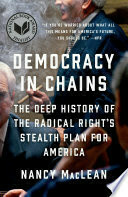
Currently reading: Democracy in Chains by Nancy MacLean 📚
Yesterday I read an article about James Buchanan that is inspired by this book, which I remembered I had in my Amazon library but not yet started reading. Consequently, I started reading and once again reminded of how the United States was founded.
The narrative taught when I was in school is that most people who immigrated to the new world did so to escape persecution, which was true for many people who came to the continent AFTER it was discovered. The motives behind the discovery of the continent was driven by wealth, whether through a shorter trade route to the east or the appropriation of land or gold.
Common folks who left Europe for a better life where not too much involved with the government or the decision to declare independence from England. The people who formed the United States did so to preserve their wealth, much of which starting to be generated from the plantations of the south.
Once the revolutionary war was over the people who sought independence had to decide how the new world was to be governed. Eventually what we know as the U.S. Constitution was drafted, but there was strong debate over whether there should be a single entity and a strong federal government or a federation of sovereign states. Advocates of a federation, who became known as anti-federalists, were fearful of a central government impinging upon individual rights, which honestly had much to do with the right to become as wealthy was one wishes in whatever manner one wishes, including enslaving others.
History says a compromise was reached with the Bill of Rights and the Federalists won the day, but the Federalists/Anti-Federalist debate, which was about power, continues. It lead to the Civil War and it is the root of the Dobbs Decision, and as this book chronicles, the Anti-Federalist cause has been systemically been carried out over the last five decades. I am convinced their success is in large part due to the profound lack of knowledge about history.
Remembering Sacrifice
As I reflect upon what I wrote earlier today about Memorial Day, it occurs to me that my thoughts about the meaning and purpose of this day are consistent with how I was always taught. Memorial Day is a day of remembering those who died in service for our country, yes, and because of those sacrifices I enjoy freedom. What an individualistic point of view to think of how I benefited from the sacrifice others! What is lost in narrowing the view down to myself is seeing the good in the sacrifice.
We live in an extremely cynical world that teaches humanity only seeks personal advantage, that we are primarily driven by self-interest. The concept of sacrifice pushes against this cynicism. People who run into a burning building and sign up to serve in the military do not want to die but they understand the possibility and and do anyway because they are not driven by self-interest.
It is good to remember those who died in service to our country, and it is even better to remember why they died, which was less for our individual freedom and more for something beyond themselves, something good that they themselves would not enjoy. Cynicism and contempt of others is not the lesson of Memorial Day. Cynicism teaches us why there is evil, but in a such a worldview the far more interesting and important questions is, why is there any good?
New iPads: Deja vu All Over Again
1984 Is In The Past
SCOTUS Can Push The Republic Over the Edge
In my opinion the Presidential Immunity case before the Supreme Court could be the most consequential to the future of the United States of any case in my life time. The case raises the question of whether Richard Nixon was right in his claims that a President of the United States can never go before the court, that they are not really bound by the rule of law. Had Gerald Ford not given Nixon a pardon it is likely that the Supreme Court in that day would have heard a case similar to the one before them now for Trump.
I can see a Supreme Court of justices who claim to be originalists proclaim that the President is above the law because the U.S. Constitution has holes as it is made of words. When fundamentalists only look for words and ignore meaning or intent that enables them to promote an ideology. The originalist ideology seems intent on returning us to past centuries in which white men held all the power and for which liberty only applied.
If the United States is a nation based on the rule of law, and the Supreme Court says that rule of law does not apply to the President, how can the republic remain based on the rule of law?